






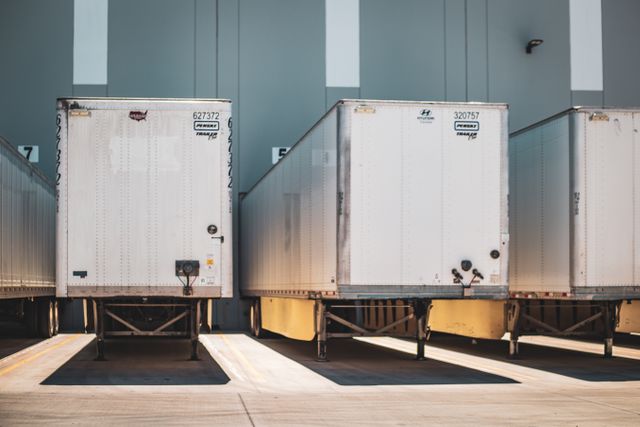
Sometimes transport buyers regard pallet freight and full-load movements as two entirely separate worlds. In practice, many growth firms do both. A few pallets may go through a shared network most weeks. Suddenly a product launch, harvest or large customer order fills a trailer. The useful decision is not which mode is better everywhere. It is the option that matches the volume, urgency, handling risk and receiving conditions of a particular shipment.
Consolidation is good in that multiple customers share capacity, but that also means the goods may go through depots, and sit next to other loads. A full car can make handling easier and give you more control over timing but it only makes sense economically if you are using enough space. Understanding these trade-offs enables planners to avoid paying for capacity that is not used, or imposing a large urgent movement on a network designed for smaller consignments.
The Decision Starts with Volume and Urgency
Businesses moving pallets and full loads between states are able to develop a simple decision framework based on cubic space, number of pallets, product sensitivity, and deadline. Consolidation may be suitable for well packaged, flexible and stable goods. Dedicated capacity may be justified by a large homogeneous order, or by unusually delicate goods, or by a fixed appointment. The trick is to make a conscious decision, not just go with what you used for the last shipment.
Consolidated pallets are to be presented well as they will be handled among many other consignments. Dimensions should be accurate, labels durable and stacks stable enough to withstand normal fork lift movement. Non-stackable goods must be declared as the empty space above it is still taking up capacity. If data is packaged honestly, transport planners can use it to allocate space efficiently and reduce the chances of a load being re-classified after collection.
Good Units Benefit from Consolidation
Some duties are shifted under full loads. The sender may need to coordinate loading time carefully since a vehicle is dedicated to the job. The whole caravan becomes more important in terms of weight distribution, restraint and loading sequence. If there is more than one delivery point, the goods should be arranged by route, so that it is not necessary to unload half the vehicle to get at the correct goods at any one stop.
Receiving conditions might sway the outcome. A distribution center with a narrow time slot may be a candidate for special planning during peak periods, while a receiver with wide hours may readily accept consolidated goods. The requirement for a tail-lift, availability of forklift and site access are also important factors. The cheapest line-haul alternative can be expensive if the vehicle arrives with equipment that is not suited to the final unloading environment.
Planning responsibilities differ with full loads
A mixed strategy is efficient for many businesses. Forecast peaks are preserved for larger movements while regular replenishment can be performed on shared services. Shipment history tracking indicates when pallet counts are close to the point where dedicated capacity becomes competitive. Sales and operations teams will be able to discuss upcoming promotions or contracts early enough to ensure they have the right mode, rather than making a rushed change at dispatch time.

A Mixed Strategy Is More Effective Than One Rule
The best transport model is flexible, but it is not fuzzy. Clear rules based on volume, urgency, handling and destination enable consistent choice by staff, while allowing room for unusual cases. Pallets and full loads are not competing philosophies, they are tools for different freight shapes. Used together they can create a network that scales to demand rather than having to run every order through the same operational mould.









Leave a comment