







Choosing the right trampoline for your child involves considering their age, physical development, activity level and safety requirements. Trampolines can provide an enjoyable way for children to stay active while developing balance, coordination and confidence. However, different designs offer different features, making it important to select an option that suits your child’s abilities. Understanding age recommendations, size requirements and safety features can help parents make a more informed decision when choosing a trampoline for home use.
Understanding Trampoline Options for Different Age Groups
A child’s age is one of the first factors to consider when selecting a suitable trampoline size chart by age. Younger children generally require equipment specifically designed for their developmental stage, with particular attention to stability, enclosure protection and age recommendations. Small trampolines designed for supervised use can offer a suitable introduction to bouncing activities, although children under six should not use full-sized trampolines according to major paediatric safety recommendations. Parents should always check the manufacturer’s minimum age guidance and consider whether their child has the physical coordination needed for the activity. Choosing equipment that matches a child’s abilities can help create a more appropriate and enjoyable experience.
As children grow older, their physical abilities and confidence may allow them to explore a wider range of trampoline activities. School-aged children may enjoy larger models that provide more bouncing space, provided the equipment is suitable for their age, weight and development. Older children and teenagers may also prefer trampolines with stronger frames, larger jumping surfaces and durable construction. However, a larger trampoline is not automatically safer or more appropriate for every child. Parents should consider the recommended age range, maximum user weight and intended use before making a purchase. Selecting a model that supports the child’s current abilities rather than simply buying the largest available option can be a more practical approach.
Choosing the Right Trampoline Size for Your Available Space
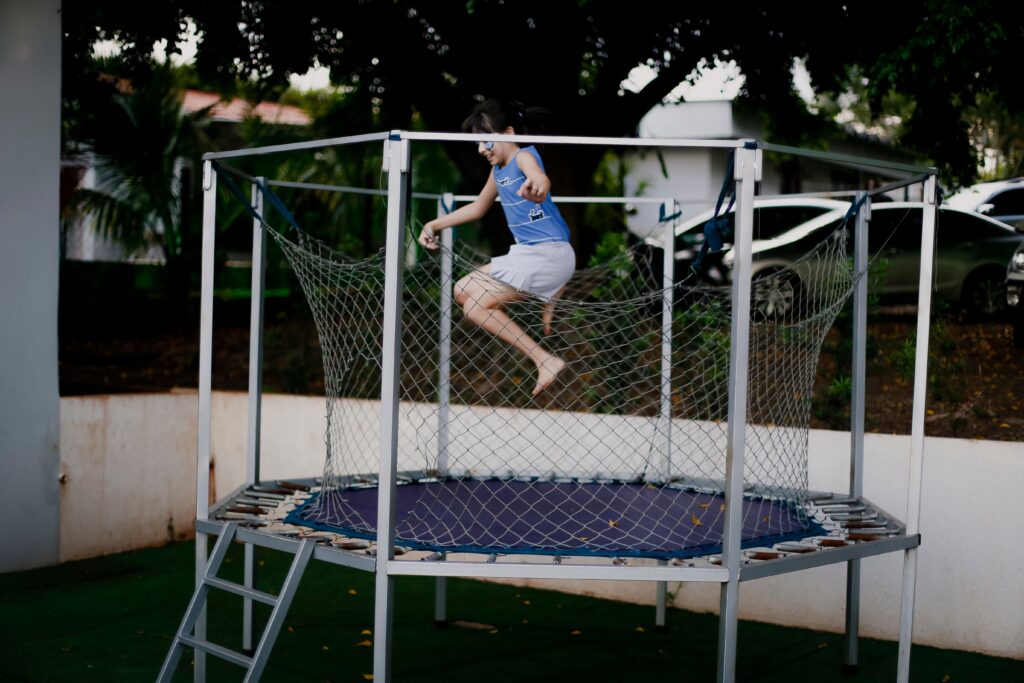
Trampoline size is another important consideration because it influences both the available jumping area and the space required for safe installation. Smaller models may be suitable for compact outdoor areas, while larger trampolines generally require more room and careful positioning. Before purchasing, parents should measure the intended installation area and consider the trampoline’s overall dimensions, including its enclosure. It is also important to leave adequate clearance around the equipment so that children are not exposed to nearby walls, fences, trees, garden furniture or other obstacles. A suitable location can help reduce potential hazards and make supervision easier.
The available jumping surface should also match the intended users and their activity levels. A trampoline that is too small may restrict movement, while an oversized model may not be practical for a household with limited outdoor space. Parents should remember that trampoline size does not determine how many children can safely jump at once. Safety organisations recommend allowing only one person to use a trampoline at a time because simultaneous jumping increases the risk of collisions and injuries. Considering the available space, jumping area and manufacturer’s installation instructions can help families choose a suitable design without compromising their outdoor environment.
Comparing Safety Features and Construction Quality
Safety should remain a priority when comparing different trampoline models. A strong frame, secure jumping mat, protective padding and suitable enclosure netting are important features to examine before making a purchase. The frame should be made from durable materials designed to withstand regular use and outdoor conditions. Protective padding should cover exposed springs and hard frame components to reduce direct contact during use. An enclosure can help reduce the risk of falling off the jumping surface, although it does not eliminate all trampoline-related injuries. Checking how securely these components are attached can provide a better understanding of the equipment’s overall construction quality.
Parents should also examine the stability of the trampoline and the quality of its supporting legs. A well-designed structure should remain stable when installed according to the manufacturer’s instructions and used within its recommended weight limits. Weather-resistant materials can be particularly useful for outdoor trampolines because they may be exposed to sunlight, moisture and changing temperatures. It is worth checking whether replacement parts, protective padding and enclosure components are available if repairs become necessary. Product certifications and compliance with relevant safety standards can also provide useful information when comparing options. Taking time to assess these details can help families select equipment that offers better durability and more reliable protection.
Considering Your Child’s Physical Development and Activity Needs
Every child develops physical abilities at a different pace, so age should not be the only factor influencing trampoline selection. Balance, coordination, strength and confidence can all affect how comfortably a child participates in bouncing activities. Children who are new to trampolines may benefit from starting with simple movements under close adult supervision rather than attempting complicated jumps or tricks. Parents should also consider any manufacturer guidance about suitable activities and whether the trampoline is intended for recreational use or more advanced movement. Choosing an appropriate model can help children enjoy physical activity without being encouraged to attempt movements beyond their abilities.
Trampolining can provide opportunities to develop body awareness, coordination and general physical fitness when approached responsibly. However, children should receive clear instructions about safe behaviour before using the equipment. They should avoid performing flips, rough play, pushing or jumping too close to the edges. Adult supervision is essential, particularly for younger children, and access to the trampoline should be controlled when it is not in use. Establishing simple rules can help children understand that trampolines are designed for recreational activity and require careful use. By considering physical development alongside safety recommendations, parents can make a more suitable choice for their child’s needs.
Evaluating Durability, Maintenance and Long-Term Value
A trampoline is an outdoor investment, so durability and maintenance should be considered before choosing a particular model. Regular exposure to sunlight, rain and wind can affect materials over time, particularly when equipment is not properly maintained. Parents should compare frame construction, jumping mat quality, stitching, springs and enclosure materials to understand how well a trampoline may withstand regular use. Checking the manufacturer’s warranty and availability of replacement components can also help determine its long-term value. A model with durable construction and accessible replacement parts may be more practical than a cheaper option that requires frequent repairs.
Ongoing maintenance is equally important for keeping a trampoline in suitable working condition. Parents should regularly inspect the jumping mat, frame, springs, protective padding and enclosure for signs of damage or wear. Loose fittings, torn materials and weakened components should be addressed before the equipment is used again. Following the manufacturer’s cleaning, storage and maintenance instructions can help protect the trampoline from unnecessary deterioration. During severe weather, appropriate precautions should be taken to prevent the equipment from moving or becoming damaged. Ultimately, choosing a trampoline that matches your child’s age, physical abilities, available space and safety requirements can provide a more enjoyable outdoor activity while helping families make a well-informed purchase.






Leave a comment