






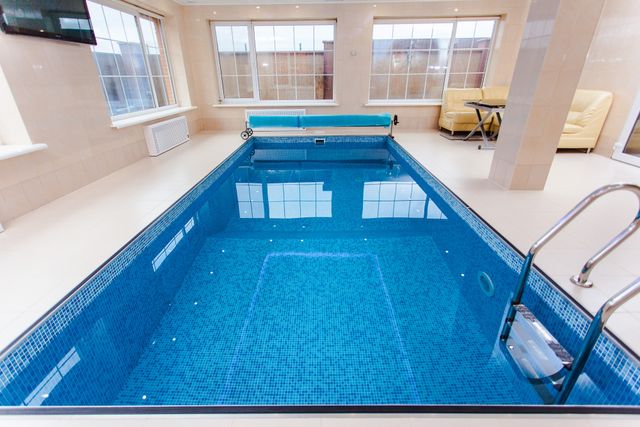
Most people assume the pool just needs a clean. That instinct, in many cases, ends up costing them significantly more down the track.
In Sydney, where UV intensity is high and pool chemical demand is relentless across long summers, pool renovations involve interior surfaces that deteriorate in ways that look cosmetic but often signal something deeper. Distinguishing routine ageing from genuine structural failure requires knowing what each visible sign actually represents.
When the Pool Shell Starts Communicating?
The state of a pool interior is reflected in patterns, not incidents. A single stain is not necessarily an issue, but if discoloured patches are extending from above the waterline downward, it could mean that the binding matrix of the surface has started deteriorating chemically. The same applies to texture changes. Pebblecrete surface used to be uniform underfoot but suddenly developed some rough areas; this is not an effect of ageing alone, but rather a sign of losing material in those spots, and the process becomes faster as soon as it begins.
It is shocking for property owners how rapidly the time frame for repair shrinks. Surface delamination occurs, cracks allow water to get to the reinforcement steel, and instead of being done within two days, the repair becomes a much more extensive and expensive project.
Reading Cracks, Rust Stains and Hollow Patches Correctly
Hairline cracks in a pool shell are a pretty common occurrence, and it’s not always a sign that the whole thing is going to come crumbling down. The real questions you want to be asking are where those cracks run, whether they get any wider when the shell is moving and shifting, and whether they happen to coincide with some staining going on. Rust stains in particular, the orange-brown marks that just seem to radiate out from some point on the floor, are usually a sign that some of the reinforcement steel underneath the surface has started to rust and oxidise. The industry calls this concrete cancer, and you can guess what happens when you just slap some new surface stuff on top of it; nothing lasts, and the problem just keeps on coming back.
The hollow knock test is one of the best tools you’ve got when it comes to figuring out whether or not your pool is going to be okay. Give the inside of the pool a tap with a coin, and where the material has separated from the shell you should hear a clear, resonant sound. It’s those bits that are just hanging loose that have lost their adhesion; they’ll just keep on cracking and pulling apart and eventually, and it’s usually pretty soon not later, they’ll start to pull the bits around them apart too.
Pool Safety and What a Renovation Should Factor In
So now’s a good time to take a good hard look at your pool barrier and make sure it’s all up to code. In NSW, the laws around pool safety are a bit of a minefield, and it really depends on when your pool was built, and what standard your barrier has to meet. If the pool has been around a while, it was probably built to whatever standard was in place at the time, unless of course you’ve made some pretty significant changes to the barrier itself since then. When you are doing some renovations on your pool, it’s worth checking in with the council to see what the rules are, whether you need some sort of inspection or certification and what the process is for getting it all sorted out.
Swimming pools, by the way, are still one of the most common places that people end up getting hospitalised in Australia, and that’s a fact that comes from the Australian Institute of Health and Welfare’s latest statistics. The rates are pretty high for kids under five, especially boys, about 8.5 per 100,000 last year or so. Reviewing the barrier at the same time as you’re doing some interior work is a pretty cost-effective way of taking care of it, and the consequences of not doing so are pretty serious.
The Four Levels of Intervention
When it comes to a pool renovation, you’re not talking about just one thing; you’re talking about a whole range of work, all the way from just fixing a few minor issues to a complete overhaul of the whole pool.
- Localised repairs: this is when you just fix up a few specific problems, like rust patches or areas where the surface has got a bit hollow, without having to dig up too much of the rest of the pool.
- Interior only: this is when you’re just going to strip the surface off, apply a new one and keep the existing tiles and coping.
- Interior and waterline tile replacement: this is the same as above, but with the added bonus of retiling the whole waterline.
- Full renovation: this is where things get really serious; this is when you’re talking about getting the whole pool done over, interior, coping, surrounds, plumbing, lighting, you name it.
Most pools don’t need the full Monty, but what they do need is someone who can give an honest assessment of what’s worth fixing and what isn’t.
Getting the Assessment Right Before Agreeing to Anything
So, what’s the best thing you can do before committing yourself to a pool renovation? Well, if you’re smart, you separate the assessment visit from the pitch to do the work. If a contractor can honestly tell you what doesn’t need to be replaced, then you know they’re genuinely looking after your best interests. And to be sure you’re making the right decision, take a look at what the other contractors say, get two or three of them to come and take a look, and then compare what they say you need to fix; that’s the way to get some real confidence in what you’re doing before you start pulling out your wallet.







Leave a comment